Emerald Ash Borer
A thinning ash canopy deserves a closer look. Understanding what is happening beneath the bark can help you decide whether to protect the tree or plan its removal.

What it is—and which trees are at risk
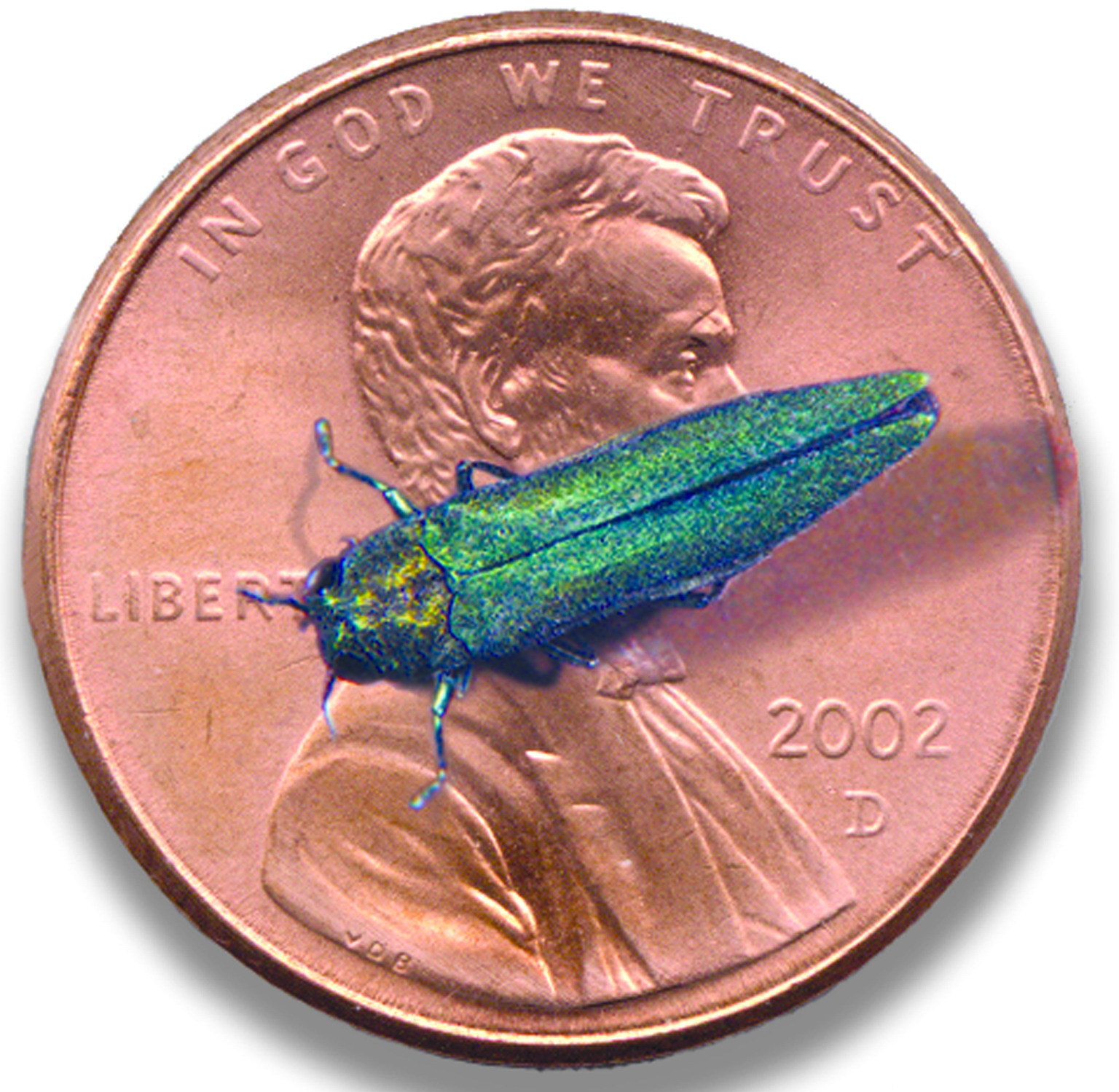
Emerald ash borer (Agrilus planipennis) is an invasive beetle that attacks ash trees in the genus Fraxinus. It is a serious Minnesota tree health problem. The larvae feed beneath bark, damaging the tissues that move water and nutrients. Continued feeding can girdle and kill the tree.
Identify the tree before making a treatment decision. A green beetle on another kind of tree is not enough to establish an emerald ash borer infestation.
What homeowners may notice
- A canopy that becomes thin, especially near the top, with increasing branch dieback.
- New shoots growing on the trunk or near the base.
- Woodpecker activity that exposes lighter bark—a change often called “blonding.”
- Vertical bark splits, small D-shaped adult exit holes, or winding S-shaped larval galleries beneath bark.
Infestation may develop before obvious symptoms appear. Drought, damaged roots, and other problems can also cause ash decline.
A photograph alone may not establish a diagnosis. An evaluation may include tree identification, site and root conditions, pest evidence, and laboratory testing. Avoid cutting into bark or collecting high branches yourself.
How it spreads—and why nearby ash matters
Adult beetles can fly to other ash trees. Moving infested ash wood or firewood can carry the insect farther. Nearby susceptible ash may be at risk even when their foliage still looks healthy.
Follow current Minnesota Department of Agriculture guidance for firewood, ash material, and disposal. Do not transport suspect wood to another property to use as firewood.
Without effective management, an infested ash can die. Dead ash can become brittle quickly, creating risks from falling limbs or the whole tree. A removal assessment should not wait until every branch has died.
Protection, treatment, or removal?
Emamectin benzoate trunk injections are a well-supported professional option for suitable ash. TREE-äge is one product family containing this ingredient. The specific formulation, label, tree condition, and application timing determine the treatment plan; brand names alone do not establish suitability.
University of Minnesota injection research · TREE-äge G4 label and product information
Insecticides can protect suitable ash trees, and trunk injection is a professional treatment option. The decision depends on the tree’s condition, the local infestation risk, and the homeowner’s willingness to maintain protection over time.
University of Minnesota Extension advises that treatment works best before major decline. Application timing depends on the product and the tree’s ability to take up the material; a full, active canopy is important. A licensed applicator must follow the current label for the tree, pest, method, and timing.
Treatment cannot restore dead branches or make a structurally unsafe tree safe. Removal may be recommended for a dead or severely declining ash, significant structural defects, or when continued treatment is unsuitable. Appropriate wood handling and replacement planting should be part of the discussion.
When to contact Elijah
Call if you see new canopy thinning, bark changes, or dead branches on an ash—or if you want to discuss protecting a valuable tree before symptoms appear. Please mention the location, how long you have noticed changes, and any previous treatments.
For an estimate request, write “ash tree health evaluation” in the project details. Keep clear of hanging or unstable branches.
Read the science
Educational information reviewed October 2026. Recommendations may change; the current product label governs pesticide use.
- University of Minnesota Extension: Emerald ash borer in Minnesota—identification and treatment decisions.
- Minnesota DNR: EAB management—risk and protection options.
- Minnesota Department of Agriculture: Homeowner resources—wood movement, disposal, and illustrated identification guides.
- University of Maryland Extension: Emerald ash borer—symptoms and tree safety background.
Let’s talk about your tree.
Tell Elijah what has changed, when you first noticed it, and whether other trees nearby are affected. We can discuss your concerns and arrange an evaluation to determine appropriate next steps.