 Elijah’s Tree Care
Oak Wilt
Sudden wilting and leaf loss on an oak are worth investigating promptly. A careful diagnosis helps guide decisions for that tree and the oaks around it.

A serious disease of Minnesota oaks
Oak wilt is caused by the fungus Bretziella fagacearum. It interferes with water movement inside the tree. All Minnesota oak species can be affected, but their responses differ.
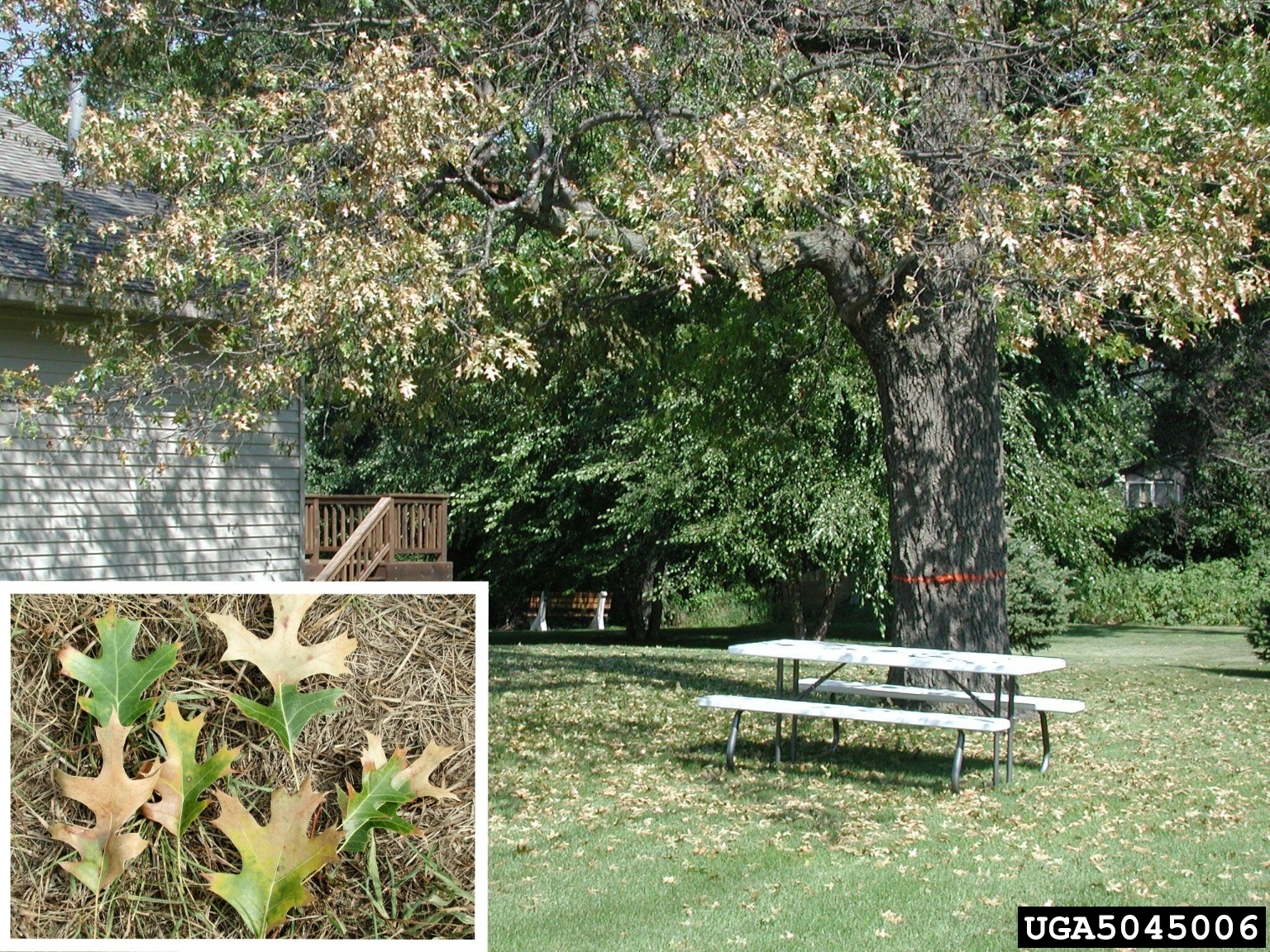
Red-group oaks—including northern red and northern pin oak—can wilt and die rapidly. Bur and white oaks generally decline more slowly. Do not assume a slow decline rules out oak wilt.
Recognizing a possible problem
- Leaves wilt or brown, often beginning in the upper or outer crown.
- Leaves may have brown edges while the center remains green.
- Unusual leaf drop occurs during the growing season; partly green leaves can fall.
- A red-group oak can lose much of its canopy over a short period.
Bur oak blight, drought, root injury, and other problems can resemble oak wilt. Minnesota DNR recommends laboratory confirmation before investing in control, particularly for bur and white oaks.
A photograph alone may not establish a diagnosis. An evaluation may include tree identification, site and root conditions, pest evidence, and laboratory testing. Avoid cutting into bark or collecting high branches yourself.
Two ways it reaches another oak
Below ground: The fungus moves through natural root connections, called root grafts, between neighboring oaks. More trees may be infected than are visibly wilting.
Above ground: Sap-feeding beetles can carry spores from infected wood to fresh wounds on healthy oaks. Some recently killed oaks can produce spore mats beneath their bark.
Oak wilt can kill trees and leave dead limbs that need a safety assessment. The disease does not simply stay within the first tree showing symptoms: nearby oaks and infected wood must be considered.
A coordinated plan—not just an injection
A professional plan may combine root-graft interruption, selected tree protection, removal, and proper handling of infected wood. The order matters. DNR guidance generally calls for an underground treatment boundary before infected trees are removed; where a boundary is not feasible, timing and wood handling need a site-specific plan.
Fungicide injections containing propiconazole may be appropriate to protect selected valuable oaks. The exact product must be labeled for the tree, disease, and injection method. They do not stop underground disease movement. An oak wilt injection is not a general cure for a tree that is already severely affected; red-group oaks with advanced symptoms usually cannot be saved.
Early symptoms in some white oaks may warrant a different treatment discussion. Tree species, confirmed diagnosis, infection stage, nearby trees, and the current product label determine what is appropriate.
Prevent fresh wounds during the risk season
For Minnesota yard trees, DNR recommends avoiding pruning or other oak wounds from April through July. An unusually warm spring can bring risk earlier. Plan routine work around current Minnesota guidance.
If hazardous branches must be cut during the high-risk period, DNR advises immediately covering fresh cuts with tree wound paint or shellac. This is an oak wilt prevention exception, not a routine recommendation to paint every tree wound.
Do not move recently infected oak logs to another site. Have a professional explain safe wood handling and any local disposal requirements.
When removal may be recommended
Removal may be necessary for a dead tree, advanced disease, significant safety defects, or an oak included in a coordinated control boundary. Contact Elijah promptly about sudden summer leaf drop or nearby confirmed oak wilt. Mention other oaks on the property before scheduling removal.
Read the science
Educational information reviewed October 2026. Treatment suitability requires diagnosis and a site-specific assessment.
- University of Minnesota Extension: Oak wilt in Minnesota—hosts, symptoms, spread, and management.
- Minnesota DNR: Oak wilt management—control sequence, injections, pruning precautions, and wood handling.
- Minnesota DNR: Oak Wilt Guide (PDF)—detailed planning guidance.
- University of Minnesota Plant Disease Clinic—diagnostic testing information.
Let’s talk about your tree.
Tell Elijah what has changed, when you first noticed it, and whether other trees nearby are affected. We can discuss your concerns and arrange an evaluation to determine appropriate next steps.