 Elijah’s Tree Care
Dutch Elm Disease
One wilting branch can be an early warning. Prompt evaluation can clarify what is affecting an elm and whether nearby trees need attention.

What Dutch elm disease does
Dutch elm disease is caused by the fungi Ophiostoma ulmi and O. novo-ulmi. They invade the tree’s water-conducting system. The tree’s response to infection also blocks water movement, contributing to wilt.
The disease is present throughout Minnesota. American, slippery, and rock elm are susceptible. Some cultivated elms have disease resistance, but resistance should not be treated as a promise of immunity.
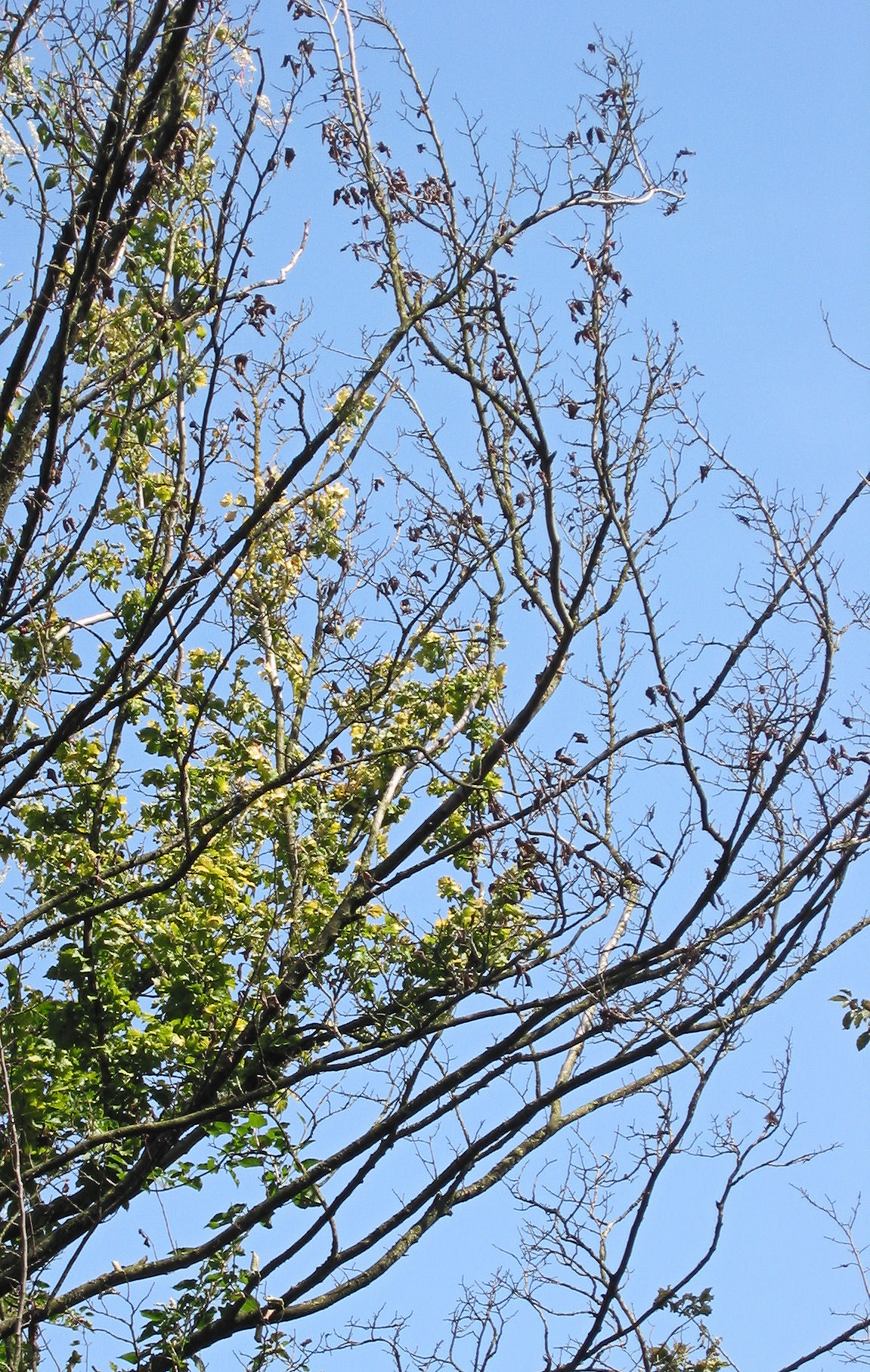
Look for “flagging” in the canopy
- A small area of yellowing, browning, or wilting leaves, often on a branch near the edge of the crown.
- Wilt that expands into more of the canopy or progresses toward the trunk.
- Brown streaking in the sapwood of affected live branches—a clue that requires proper interpretation.
Some elms die during the same growing season; others decline over several years. Do not wait for the whole crown to turn brown before asking for an evaluation.
University of Minnesota’s Plant Disease Clinic can test suitable live, wilting branch samples. Follow the clinic’s current instructions; do not climb the tree or strip bark to diagnose it yourself.
A photograph alone may not establish a diagnosis. An evaluation may include tree identification, site and root conditions, pest evidence, and laboratory testing. Avoid cutting into bark or collecting high branches yourself.
How another elm can become infected
Elm bark beetles can carry fungal spores to feeding wounds on healthy elms. Dead and dying elm material can provide beetle breeding sites. The fungus can also pass through natural root grafts between nearby elms.
That means protecting one elm involves looking beyond its leaves. Other elms, recently declining trees, and stored elm wood may affect the management plan.
Loss of living branches or the whole tree can create a safety concern as dead wood deteriorates. Disease symptoms do not measure structural stability; that requires a separate assessment.
Sanitation, protection, and early intervention
Removing infected material and handling elm wood properly can reduce sources of beetles and disease. Minnesota Department of Agriculture advises checking local requirements for diseased-tree removal, disposal, and elm firewood storage. Rules vary by municipality.
For selected valuable elms, professional fungicide injections may help protect against infections associated with beetle feeding. They are not reliable protection against disease arriving through root grafts, and protection may need to be repeated according to the product label.
In some early, limited branch infections, prompt pruning may help before the fungus reaches the main trunk. It is not a dependable solution once disease is widespread. A diagnosis and careful assessment of the affected branches are essential.
Where connected roots threaten neighboring elms, a professional may recommend interrupting root grafts before removing an infected tree. Product choice, timing, tree condition, and the treatment’s realistic limits should be discussed before work begins.
When removal may be appropriate
Removal may be recommended when infection is extensive, the tree is dead or unsafe, or retention is unlikely to succeed. A plan should address nearby elms and infected wood, rather than simply leaving logs for later use.
For replacement planting, discuss site suitability and disease-resistant elm cultivars or other species. A diverse landscape reduces dependence on one vulnerable tree type.
When to call Elijah
Contact Elijah about a newly wilting branch, an elm that is losing foliage unexpectedly, or protection options for a tree you want to keep. Share when symptoms began, previous treatments, and whether nearby elms have recently declined. In the estimate form, note “elm tree health evaluation.”
Read the science
Educational information reviewed October 2026. A listed management option is not a claim that Elijah’s Tree Care offers every treatment described.
- University of Minnesota Extension: Dutch elm disease—susceptible elms, diagnosis, and management.
- Minnesota Department of Agriculture: Dutch elm disease—Minnesota distribution, spread, symptoms, and local requirements.
- University of Maryland Extension: Dutch elm disease in trees—early intervention and treatment background.
- University of Minnesota Plant Disease Clinic—testing and submission instructions.
Let’s talk about your tree.
Tell Elijah what has changed, when you first noticed it, and whether other trees nearby are affected. We can discuss your concerns and arrange an evaluation to determine appropriate next steps.